Under Pressure: Hospitals are entering a new reimbursement environment. Contractors may be entering a new healthcare market.
Healthcare is a peculiar market. In economic terms, demand for its services often persists even when purchasing power does not. In layman’s speak, this means people will spend a ton of money they do not have to avoid dying.
The stakes warp the normal relationship between consumer, supply, and demand; which sounds boring until you realize the tremendous fiscal and social pressures this distortion creates.
This industry is a (if not the) central battleground in our ongoing cultural conflict. And it’s easy to see why. No one wants a child to die of leukemia because her parents didn’t have the right provider plan, just as no one wants to pay for the self-destructive lifestyles of strangers.
But few dispute that there should be some assistance. Recent polling from John’s Hopkins shows that upwards of 70 percent of Americans believe that healthcare access is a fundamental right. Medicare, a federally funded insurance program for senior citizens, is completely culturally entrenched.
The back and forth largely orbits Medicaid, which is, broadly speaking, federally funded health insurance plans for the poor. It’s been around since the 1960’s, but originally was only available for lower income children, pregnant women, parents with dependents, or the disabled.
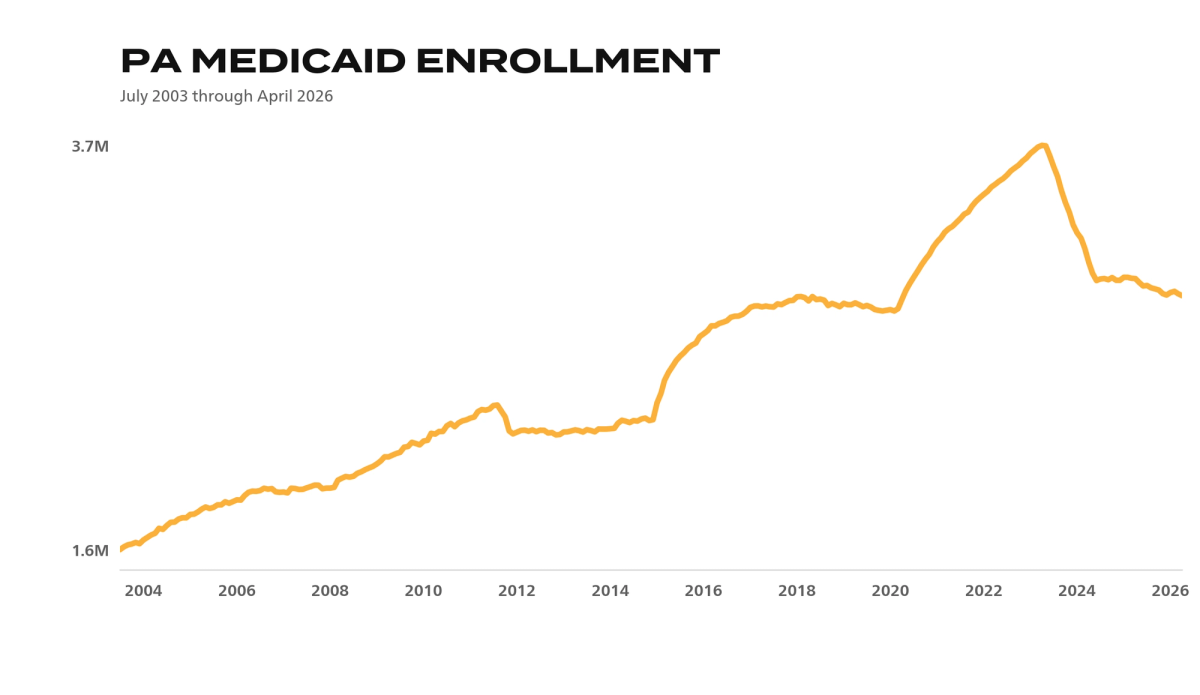
That was the law of the land until 2011, when the Affordable Care Act passed. The ACA changed Medicaid applicability to anyone under 138 percent of the poverty line. The result was a boom in Medicaid enrollment, which climbed from about 55 million in 2010 to 75 million in 2026.
The pandemic amplified the program’s expansion. During the early 2020’s, the Federal government increased funding to the states’ Medicaid programs while largely prohibiting them from removing recipients from coverage rolls. At the same time, layoffs and economic disruption pushed millions more Americans into eligibility.
The result was one of the largest expansions of healthcare coverage in American history, with Medicaid and affiliated services enrollment climbing to nearly 94 million at the peak. Spending ballooned and many became concerned about sustainability and potential abuse.
These concerns were laid on top of long-simmering frustrations with the ACA, and were redressed in the One Big Beautiful Bill, President Donald Trump’s 2025 sweeping budget-reconciliation package. The OBBB ended many of the Covid-related subsidies, introduced work requirements for those who wish to remain enrolled in Medicaid, and made very real changes to their ability to leverage internal financing mechanisms that maximize federal fund matching.
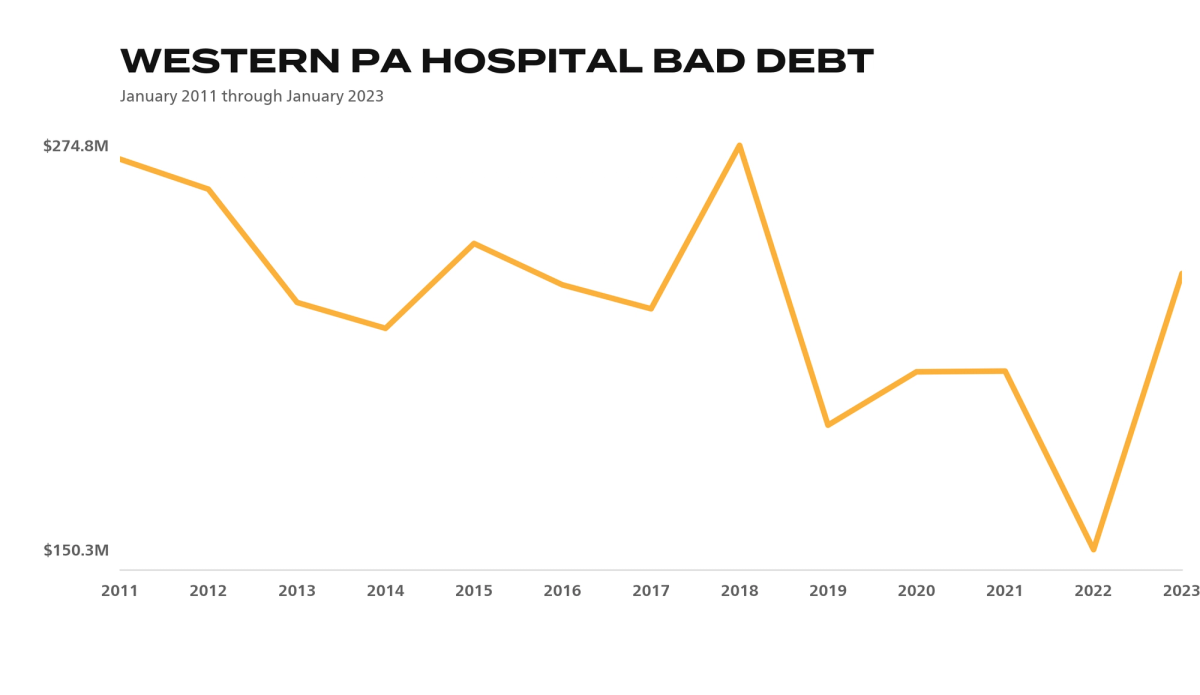
This lengthy backstory matters a great deal as healthcare construction is tied at the hip to reimbursement stability, which the OBBB just dramatically altered. The main concern of critics is the changes will cause a drastic rise in the number of uninsured. The bill, they argue, will force millions out of Medicaid, and shift a larger share of medical care into the uncompensated category.
That matters a great deal for Pennsylvania. In Medicaid, the states manage and fund the program with heavy subsidies from D.C. For the commonwealth, this means less money is coming in to fund the program. For Pennsylvania’s healthcare providers, this means tighter margins and more uncertainty of payment.
For Western Pennsylvania contractors, this could mean less jobs. But the real question for the industry is not simply whether healthcare margins decline, it’s how they will respond. And in our area, that response could also be shaped be a growing competitor from across the state line.
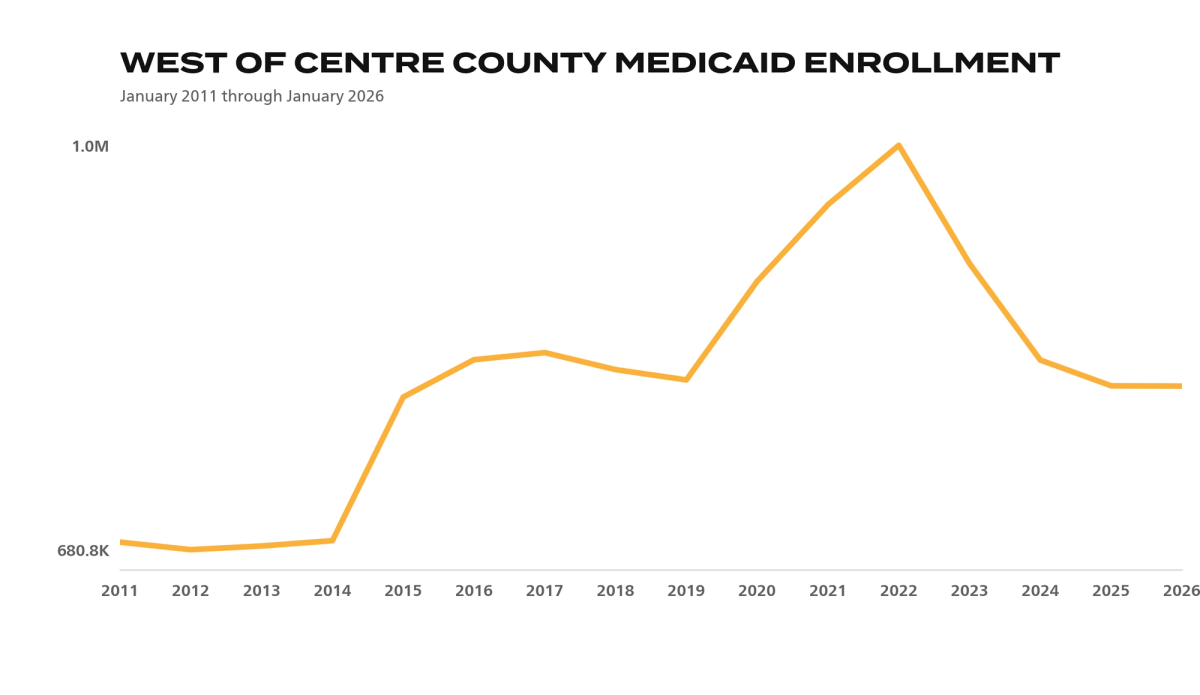
On the face of it, a serious cooldown in construction seems like a real possibility. Our region’s aging and rural demographics lend itself to high levels of Medicaid enrollment, which the OBBB is explicitly looking to reduce. The counties west of Centre added about 150,000 people to their Medicaid rolls since the ACA expansion.
Western Pennsylvania (henceforth defined as Allegheny, Armstrong, Beaver, Butler, Fayette, Lawrence, Washington, and Westmoreland counties) added nearly 90,000 people to the program between 2011 and 2019. Allegheny County currently has about 237,000 residents in the program, while across western Pennsylvania there are about 490,000 enrolled in Medicaid.
Harrisburg estimates that 310,000 Pennsylvanians will lose their Medicaid and SNAP benefits (the two are lumped together because of their connection to income) when the new work-requirements go into effect in 2027. If the state’s forecast is accurate, and there are reasons to be skeptical, it indicates that Western PA Medicaid enrollment could potentially decline by around 10 percent in the next two years.
The scale of Medicaid funding flowing through the region helps illustrate what’s at stake. The federal government’s open-source data on Medicaid provider spending shows that in Allegheny County, nearly $557 million was spent on Medicaid provider spending in 2024. Across western Pennsylvania that total was nearly $773.5 million.
A Commonwealth Fund analysis published in September 2025 estimated that mandatory Medicaid work requirements alone could reduce hospital operating margins nationally by roughly 12 to 14 percent by 2027. Rural hospitals were identified as particularly vulnerable because many already operate on thin margins and rely heavily on Medicaid reimbursement to stabilize revenue flows.
The second pressure point from the OBBB comes by changes made to the Health Insurance Marketplace. These plans are funded in part by the federal government, and the subsidies they provided were greatly expanded during the pandemic. The OBBB ended that expanded assistance and returned baseline subsidies to their pre-pandemic levels.
For the consumer this means higher rates and for healthcare providers it means more uncertainty. The concerns here are that the higher costs will push many out of the coverage system entirely or create a surge of insureds on lower tier programs. Unlike the work requirements, these changes began in 2026, so their impact in the data is already visible.
At a national level, total marketplace plan selections during the open enrollment period in 2026 were 23.1 million, drop of nearly five percent from 2025. New consumer enrollment weakened even more sharply, falling 12.7 percent year over year from 3.6 million to 3.1 million.
Interestingly, this does not seem to be happening (yet) at the local level. Data from Pennie, Pennsylvania’s official health insurance marketplace, shows that while new consumer enrollment fell by about 10 percent from 2025, total plan selection across the state actually increased by one percent in 2026, suggesting demand for individual market-coverage remains strong.
But under the stable enrollment figures, the economics shifted. Average monthly premiums rose by 13 percent, while the average premium consumers paid after federal subsidies jumped by 34 percent. Enrollment in Bronze plans climbed by 33.2 percent, which is notable, because they carry increased fiscal risk.
While these plans offer low monthly bills, they can leave patients responsible for thousands of dollars in out-of-pocket costs before coverage fully takes effect. In the case of serious illness, this can be fiscally devastating for the patient and numerous studies have found that higher cost-sharing is associated with increased medical debt, delayed care, and greater financial strain among insured households.
A May 2025 Commonwealth Fund analysis examined how reductions in federal Medicaid expansion funding could impact hospital finances. In the study, safety-net and rural providers were again identified as facing significant challenges, and according to the analysis, uncompensated care costs for these facilities could rise more than 80% in some scenarios.
A third major pressure point from the OBBB’s changes comes from state financing mechanisms. Many states, Pennsylvania amongst them, expanded their Medicaid coverage after the passage of the ACA. To help pay for this, they maximize federal funding for their systems with something called a “provider tax.”
Roughly speaking, this is a tax that the state imposes on hospitals and other health care facilities which is used to fund its Medicaid operations. This allows the state to raise large sums of money without taxing its residents more, and this money was heavily matched by the federal government.
The OBBB is reducing the amount of money that D.C. will match for money raised in this manner by expansion-states like Pennsylvania. A 2024 report from the Pennsylvania Independent fiscal office indicates that provider taxes generated approximately $2.8 billion in matching federal funds.
The cumulative effect of these changes is difficult to ignore. Taken together, it’s hard to argue the industry is not operating in a more challenging reimbursement environment today than just a few years ago. While much of the OBBB’s impact will take years to fully emerge in the data, the uncertainty it has created surrounding the impact on reimbursements could very well act as a downward drag on the construction industry.
But that isn’t the only outcome. Healthcare systems have spent decades adapting to changing reimbursement environments. The question is not whether providers will respond, but how.
Historically, many have pursued strategies designed to improve operating margins, including consolidation and outpatient expansion. For contractors, consolidation is probably the big one to watch.
This is something that’s been happening throughout the region for decades. During that time, many once independent hospitals and health care networks have been absorbed into the orbit of UPMC and Allegheny Health Network. These two institutions have the resources to absorb tighter margins by centralizing the bureaucracy that manages them while maintaining their own insurance network, streamlining the process further.
Over the past decade, both entities have expanded into rural parts of western and central Pennsylvania, West Virginia, New York, Ohio and Maryland. The most recent examples being UPMC acquiring Washington Health System in 2024, and their ongoing acquisition of Trinity Health System in Steubenville Ohio. AHN is doing currently something similar with Heritage Valley Health Systems in Beaver County.
For contractors, this matters because these acquisitions/mergers are often accompanied by significant facility upgrades. For instance, UPMC committed $85 million into upgrading the Jameson facility in New Castle, and $300 million over ten years when they acquired Washington Health systems. AHN committed $40 million over the same time period to Grove City and $115 million to Saint Vincent.
In recent years, numerous bids have come about from this. Since 2025, UPMC has moved forward on at least four substantial renovations to the former Washington Health Systems hospitals it acquired in 2024. After absorbing it in 2013, AHN began building out new emergency departments, operating rooms, and surgery suites across the St. Vincent network.
According to the PA Department of Health data there are currently about 90 hospitals in the 28 counties west of Centre. Of these, over a third are owned (or about to be owned) by UPMC or AHN. Of the remaining centers, a handful are state or federally operated systems, and a handful more are already part of national chains. What’s left are independent chains like Penn Highlands, Conemaugh/Lifepoint, Meadville Medical Center, and LECOM Health. Additionally, there are several more such systems in eastern Ohio, upstate New York, and western Maryland.
This consolidation trend has also caused something quite interesting to happen, and that is the arrival of a new competitor in the market. In 2024, the West Virginia University Medicine system leased 90,000 square feet of office space in the SouthPointe office park, which will become state of the art clinical space. Shortly thereafter, the group announced a merger with Independence Health System, giving WVUM a real foothold in Butler, Clarion, Westmoreland, Mount Pleasant, and Latrobe.
This is the first real challenge to UPMC and AHN’s regional hegemony by an outside group. And WVUM is a real deal competitor hyperfocused on growth. Between 2013 and 25, WVUM went from running five hospitals to 25, expanding through a combination of acquisitions, facility investments, and service-line growth.
Also noteworthy is their Peak Health insurance program. Launched in 2023 by WVUM, Marshall Health Network, and Valley health, its creation mirrors UPMC’s strategy of combining a large hospital and physician network with an insurance arm, allowing the organization to provide care and insure patients within the same ecosystem.
During this same time, WVUM revenue increased by nearly $4 billion, with leadership publicly describing the organization has having reached “critical mass” after years of expansion. The group has spent over $1 billion in capital expenditures since 2023 and have pledged $800 million in upgrading the facilities they recently acquired through Independence Health.
Their arrival could be a real net gain for contractors. The money already pledged will no doubt lead to future construction jobs; Additionally, WVUM’s acquisition of Independence Health finalized after the implementation of the OBBB, indicating that larger systems are confident enough to continue expanding even with greater uncertainty surrounding their reimbursements.
Their presence alone could place pressure on both UPMC and AHN to continue building/renovating/expanding. Not just new hospitals, though that’s possible, as AHN’s dormant plans to replace its 104-bedroom hospital in Canonsburg were interestingly kickstarted back to life in June of this year, but for the systems that feed the hospitals.
Increased competition could lead to increased capital spending across outpatient centers, MOB’s, oncology expansions, imaging centers and the like. While UPMC has not announced any new hospitals after work wraps up on the $1.3 billion Kamin Tower Expansion at UPMC Presbyterian, there have been numerous notices from the group about an expanding focus on ambulatory services.
These are procedures or visits that do not require a stay in the hospital. A 2025 report by the Center for Connected Medicine at UPMC Enterprises argues that the future of healthcare growth is shifting away from large inpatient hospitals and toward networks of outpatient facilities located closer to patients.
Of particular importance is technological advances which have enabled more and more outpatient surgeries. According to a 2026 analysis from the University of Pennsylvania's Leonard Davis Institute, the shift toward outpatient surgery has evolved from a pandemic-era response into a long-term transformation of healthcare delivery. More than 65% of surgeries in the United States are now performed in outpatient settings, and outpatient surgical volume continues to grow by roughly 6% annually.
This could accelerate soon thanks to federal policy changes. The Centers for Medicare & Medicaid Services (CMS) is phasing out its "Inpatient Only" list through 2028, beginning with 285 procedures in 2026. Historically, procedures on this list could only be performed in a hospital inpatient setting.
As those restrictions are removed, health systems will have greater flexibility to shift surgical volume into outpatient facilities and other lower-cost care settings. A study from the Leonard Davis Institute noted that this shift has helped reduce the total costs of common surgeries like join replacements by $6,000 - $7,000.
According to the Pennsylvania Department of Health, the statewide number of outpatient ambulatory centers has risen from 71 to over 300 from 2000-25. During that same time in Western Pennsylvania, the number of these same types of facilities has climbed from 22 to 76.
Whether the OBBB ultimately slows healthcare construction in Western Pennsylvania remains an open question. On one hand, the legislation introduces real reimbursement pressure into a sector already grappling with labor shortages, inflation, and rising operating costs. Hospitals facing thinner margins may become more selective about capital spending, delay major projects, or shift investments toward lower-cost facilities and outpatient models.
On the other hand, healthcare systems have repeatedly demonstrated an ability to adapt. Consolidation, ambulatory expansion, and geographic growth are all strategies designed to preserve margins while expanding market share. In Western Pennsylvania, the arrival of WVU Medicine as a serious regional competitor could accelerate those trends rather than slow them.
For contractors, that may mean the next decade of healthcare work looks different than the last. Instead of large inpatient towers, opportunities could increasingly emerge through medical office buildings, ambulatory surgery centers, imaging facilities, specialty clinics, and renovations tied to acquisitions and system expansion.
The reimbursement environment may be becoming more challenging, but healthcare remains one of the few sectors where demand doesn’t disappear. The question is not whether healthcare systems will continue investing in facilities. The question is where they choose to invest, and which organizations are best positioned to grow in a more uncertain environment.