I have seen more AEC companies die from indigestion than starvation.
That is a hard pill to swallow in an industry that measures success by the size of a backlog and the number of trucks on the road. We are taught that "busy" is the shield that protects us from the wolves at the door. But as we look at the reality of 2026, that shield is starting to look more like an anchor.
Right now, we are dealing with tremendous uncertainty, and that is unlikely to change. We have headlines about global conflicts. We have interest rate whiplash. We have the very real pain of high gas prices that our employees see every morning while sitting in traffic on McKnight Road. The atmosphere in the construction industry is thick with uncertainty. When you add the anxiety around layoffs and the unpredictability of tariffs and material prices, the natural instinct for any employee is to jump into reaction mode.
But here is the truth you already know: In this environment, "busy" is often a mask for "broken." Whether you are leading a firm with $10 million in revenue or over $1 billion in revenue, a full backlog of the wrong work isn't an asset. It is a suicide mission.
The reason you are on that mission is because they don’t actually understand where you are going. And in uncertain times, this is a message that needs to be repeated regularly, usually weekly.
The Myth of the "World-Class" Reactor
Let’s give credit where it’s due. The people in your organization are world-class problem solvers. They have to be. In the construction industry, if you can’t react to a 4:00 AM concrete blowout or a sudden 15 percent spike in asphalt prices, you don’t last a week.
But we also know that your team’s greatest strength is often your company’s greatest hidden risk. Because they are "world-class reactors," they are currently working 60-hour weeks to solve the wrong problems.
We’ve all seen the core issue. It isn't that they are making "bad" decisions. It is that they are making decisions in a vacuum. Most CEOs have a Strategic Plan, but it is often locked in a drawer living only in the minds of the C-suite or your teams don't understand how it impacts their daily work. Your teams feel the fear of a shifting economy. They take action they think is appropriate to protect the company. For example, they bid on projects outside your sweet spot because they think "any work is good work" in a crisis.
They are jumping into reaction mode because they haven't heard a different directive since the last quarterly meeting or they don't believe it's what you really want. But we know that reactivity without strategic insight is just motion without progress. Your team is solving for volume because they don’t have the weekly pulse of what the company actually values. If the person bidding the job or the person running the site doesn't hear the Strategic Plan reinforced every single week, they are effectively guessing.
As the leader, in times of uncertainty if you haven't translated your strategy weekly into language every level of the organization understands, you have abdicated your duty. You are letting your most anxious employees set your long-term direction.
The View from the Hot Seat
I know this because I have sat in the chair you are sitting in.
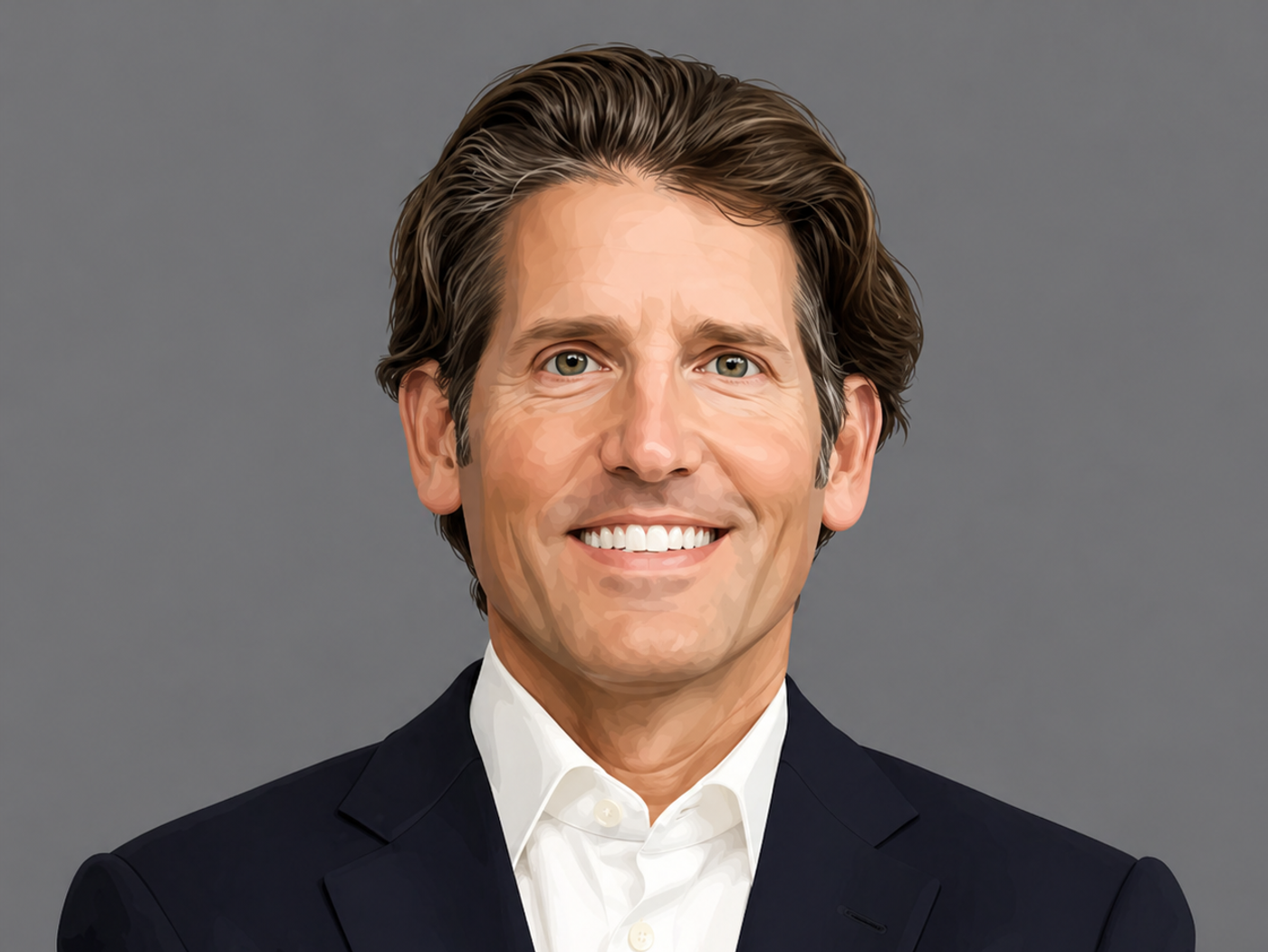
I am a recovering CEO. In my career, I’ve led and quickly grown several middle market companies in the construction and other sectors. Like you, I’ve steered organizations through the types of global volatility that make most leaders want to crawl under their desks. I’ve lived through the full-stop of the Lehman collapse and the supply chain chaos of COVID. I’ve led rapid-scale growth and I’ve navigated turnarounds.
I have the scars to prove that the "Backlog Trap" is real, and it is almost always caused by a failure to beat the drum of strategy every single week.
During COVID, we were terrified of a dry pipeline. My team did what world-class construction teams do: they hustled. They won a massive backlog of work. On paper, we were crushing it. But because we deviated from our Strategic Plan, they bid out of a "scarcity" mindset.
When the recovery actually hit and high-margin, ideal-client work started flowing back into the market, we couldn't touch it. We were full. We spent the next nine months grinding through "junk" work that barely covered overhead while our more disciplined competitors, the ones who heard the strategy weekly and knew exactly which projects to walk away from, were cherry-picking the best projects like the UPMC Presbyterian Tower Expansion. We weren't growing. We were just paying a fear tax on our past anxiety.
Building Arks and "Cleansing" the System
When we look at world class leaders, they don't react to headlines. They prepare for cycles.
Warren Buffett has a famous "Noah Rule" that every owner in the construction industry should pin to their wall: "Predicting rain doesn’t count; building arks does." Everyone can see the rain in 2026. But predicting the rain doesn't make you a visionary. It makes you a weather reporter.
Your Strategic Plan is the ark. But we all know an ark doesn't work if the crew only gets a briefing once a year. Strategy isn't a speech at an annual retreat. It is the conversation your managers have every Monday morning to keep the ark on course. The plan must be the filter that is re-verified weekly to tell your team exactly which projects to walk away from, regardless of how scary the news is. If you don't have that ark understood down to the last project engineer, you’re just a world-class swimmer waiting to get tired.
Similarly, Elon Musk often views downturns as a cleansing process. He famously noted that recessions are necessary because they stop "money raining down on fools." While that is blunt, the principle is sound for our industry. Uncertainty is the only time the market forces you to be as efficient as you should have been all along.
If your team is bidding low-margin jobs just to keep a crew busy, they are gambling your company's entire future on the hope that nothing goes wrong. They are doing this because you haven't convinced them that you value discipline more than volume. A cleansed company is one where every employee hears every week that we would rather be 20 percent smaller and 100 percent more focused than 20 percent larger and 100 percent more chaotic.
The "Right Tool" for Right-Sizing
The most difficult question we have to ask ourselves as CEOs is this: Can your company scale down 20 percent today?
Most of us would instinctively say "no" because we are afraid of losing talent. But this is where we have to challenge the "we've always done it this way" mentality. With today’s digital modernization, project management software, and outsourcing tools, a healthy firm in the construction industry should be able to scale its operations up or down by 20 percent within a fiscal year without breaking the culture or the P&L.
This is true whether they are running crews in Oakland or managing a remote site in Morgantown.
The Right Tool for the Right Time during a period of global uncertainty is not a sharper pencil for a low-bid. It is radical, weekly transparency regarding the Strategic Plan.
If you have to bid garbage work to maintain a specific headcount, you have an operational inefficiency problem, not a market problem. Use this time of uncertainty to right-size. Focus on your core competencies. If your team is busy refining their internal processes and sticking to a high-margin "ideal client" profile, you will have the dry powder to scale 100 percent when the recovery hits.
But they can only do that if they understand what "ideal" looks like every single week and believe that you actually mean it. They can only do that if you stop assuming they remember the strategy and start ensuring they see it in your actions today.
Stop Guessing and Start Leading
The patterns of 2008 and 2020 are repeating in 2026. The companies that react out of fear end up serving the market’s whims. They are the ones you see liquidating equipment three years from now. The companies that lead with a disciplined plan, and communicate that plan until they are blue in the face, end up owning the market.
Managing a business becomes a lot lighter when you stop guessing and start making confident decisions based on where you want the company to be in five years. You cannot lead based on what the headlines say this morning.
Your team is waiting for the filter. They are tired of jumping into reaction mode. They are tired of the backlog trap. They are waiting for a leader to ensure they understand, weekly, that busy isn't the goal. Excellence and focus are the goals.
Give them the plan. Build the ark. And stop bidding like you’re afraid of the dark.
Key Takeaways for the CEO:
- Audit the Weekly Communication: Go to your estimating department today. Ask them: "What is our ideal project for the next 24 months, and why?" Stay silent and listen closely. If their answer doesn't match your Strategic Plan, or if they joke that you'll approve a project just to fill the board, you have a communication crisis.
- Define the "No" Weekly: A strategy is defined by what you don't do. Give your team a No-Go checklist and review it in every Monday morning meeting. If a project doesn't fit your core competency, your geography, or your margin requirements, it is a distraction, not an opportunity.
- Translate the Strategy Daily:Move the Strategic Plan out of the boardroom. Create a one-pager that a superintendent can understand. Everyone should understand weekly how their daily decisions contribute to the five-year goal.
- Modernize for Flexibility: Use the current uncertainty to invest in tools that allow you to scale up or down 20 percent with ease. Efficiency is the only real hedge against volatility.