From Floodlights to Fiber Optics: Ferry Electric at 100
From Floodlights to Fiber Optics: Ferry Electric at 100
On May 2, 2026, Ferry Electric Company held a celebration of its 100th anniversary. As the company marks this milestone, Ferry Electric’s leaders find themselves in familiar territory, making changes to stay ahead of the market.
For James J. “Jim” Ferry II, driving change is old hat. The third-generation owner of Ferry Electric, Jim Ferry had a well-thought career plan when he graduated from Purdue University. But, at 31 he was unexpectedly thrust into leading the company his father and grandfather had run for almost 75 years. A decade later, a global financial crisis led Ferry to dramatically reorganize Ferry Electric. Over the next 15 years, the company recovered and thrived by adapting its business to new technology. Now, as Ferry Electric begins its second century in business, a new leadership team from outside the Ferry family is being groomed to continue the company’s evolution.
"Our employees have seen a lot of change over the years and have seen successful generational change. When you see change at the highest level of the organization, and it goes well, you're less afraid of change," Ferry says.
"It's amazing how adaptable people are and how, when given the opportunity, people rise to the occasion and show what they can do to move the company further. As long as you have a focus on what you're trying to do and keep a good core group of people around you, then you have a framework to manage those changes."
Adapting to unexpected changes is something that all three generations of James Ferrys have done as owners.
James J. Ferry started the business in 1926. With plans to be an accountant, Ferry endured his own wrenching change when his father died, and Ferry began working at Jones & Laughlin Steel's South Side Works at 17 to provide for his family. Four years later, when he was passed over for a promotion in 1926, he left J & L to start his own electrical contracting business. James J. Ferry saw the opportunity that electrification offered, going door-to-door in South Side to find homeowners and businesses interested in converting from gas to electricity. He incorporated Ferry Electric Company in 1928 and began working with some of the city's largest residential developers. Then came the Great Depression.
It was while Ferry Electric was scrambling to keep work coming during the Depression that another door of opportunity opened. The devastating flood of 1936 left tens of thousands of homes and businesses without power. For months, Ferry Electric had crews working almost around the clock to rewire Pittsburgh. The work established a solid foundation for the company. Ferry Electric also landed a contract with Duquesne Light's Range Program, installing more than 20,000 electric ranges as part of the utility company's program to drive electric use.
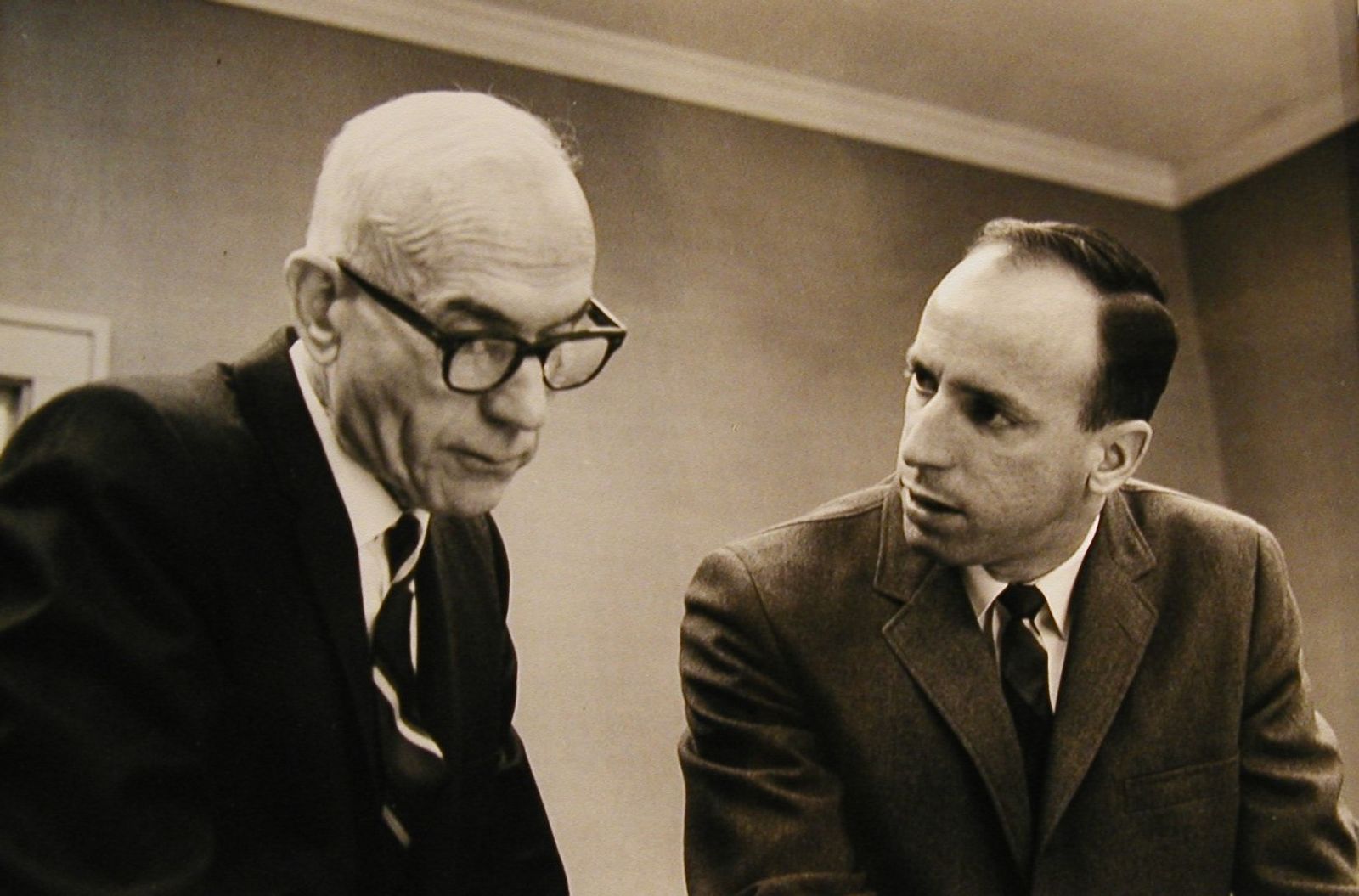
James R. Ferry joined his father in the 1950s and guided Ferry Electric as the company cultivated relationships with larger commercial and industrial clients. Ferry Electric developed a client base that included many of the region’s general contractors, developers, and major institutions. In his 50s, however, Ferry saw the economic foundation of the Pittsburgh economy collapse. Although Ferry Electric did not pursue much work in the mills that dotted the riverfronts, the economic impact of the loss of more than 100,000 jobs created difficulties for its clients, some of which did not survive the 1980s. Ferry Electric was forced to re-orient its business.
Jim joined the company in 1992, after graduating from Purdue University in 1990 and working for a residential developer in Florida. The eldest Ferry was still coming into the office, giving Jim the benefit of the experiences of two generations before him. Jim Ferry II expected a gradual transition as he learned the business but, in January 1999, James R. Ferry suffered a serious heart attack that expedited the transition.
"I left the hospital, came in here the next day and said my father is going to be out of commission for a while so I'm going to be running things," Jim Ferry recalls. "Again, we're fortunate to have such a great group of people here in the office and in the field that it was well-supported and went pretty smoothly.”
One of those employees who proved to be crucial to Jim Ferry’s successful transition was Bill Puhlman, who joined Ferry Electric a few years ahead of Jim in 1989. Ferry promoted Puhlman to vice president of estimating and project management shortly after taking the reins in 1999. Within a decade, Ferry and Puhlman faced a trio of problems that threatened the well-being of the company.
In 2007, a major project at the Veterans Administration began to lose money. A year later, the Great Financial Crisis rocked the economy, dramatically shrinking the market at a time when Ferry Electric needed more opportunities. Then, in 2009, Zambrano Construction failed, leaving two dozen or more specialty contractors, including Ferry Electric, with large unpaid bills. The crisis meant reorganizing the company, but the painful downsizing created new opportunities.
“We shrank the company after the financial crisis. In 2012, our revenue was down to $5 million,” Ferry recalls. “Bill and I were the lone soldiers in the office. From there we built our own team, organized it the way we wanted it.”
Like many of his peers, Ferry could see that the demographics of the construction industry would mean that finding and retaining skilled workers was going to be a bigger challenge than finding work as the 2010s unfolded. As he and Puhlman re-built Ferry Electric, there was a conscious effort to take advantage of emerging technologies to improve the product the company delivered. One of the technology improvements that Ferry Electric adopted early was prefabrication.
Ferry's education on prefabrication came, surprisingly, on a project the company didn't land. The successful contractor based its price on prefabricating the entire project. But the job wasn't planned well and much of the work had to be re-done. Ferry Electric's management team met vendors that worked on the job to see what lessons could be learned from the project. Their biggest takeaway from the meeting was that the industry was changing.
"We had been doing some prefabrication for a number of years, but we went all-in on the Nordenberg Hall project at Pitt," says Ferry. "On that job, we used the BIM model. We had PJ Dick [the construction manager] go on to the floors ahead of us and lay out the floors. Our crews were the only workers on those floors. We used our BIM model to run our racks down all those halls, offsetting around ductwork that wasn't going to be there for a couple of months. We dropped stubs down corridor walls that weren't standing yet."
Prefabrication reduced the number of workers on the job site and allowed far greater certainty in estimating and delivering the project. On major projects, as much as 25 percent of the scope of work is delivered through prefabrication. By the end of the 2010s, prefabrication of some portion of the scope of work was done on 90 percent of Ferry Electric’s projects.
As prefabrication became more commonplace, Ferry saw more technological changes coming to the electrical contracting market in Pittsburgh, changes that presented new opportunities and risks.
“I saw a bifurcation of the market happening. Our competitors were getting very big and end users wanted the trades to have virtual design and construction (VDC) in house. We lost a couple of projects and that was a significant part of the feedback we were getting,” Ferry explains.
“We decided we needed to build out that VDC capability. The problem with that is the investment in people and technology. You want to just hire the bodies and onboard that technology, but you need work to justify it. Presby was the opportunity to build that capability. That allowed us to build our VDC department and to integrate our prefabrication. We used that leverage to get very good at prefabrication and to learn how much we could push off site.”
Opportunities like “Presby,” the $1.3 billion UPMC Kamin Tower, provide the revenue needed to invest in capabilities that facilitate further growth, but those projects also present greater risks. To Jim Ferry, the bifurcation in the market required taking that risk to create the capacity to grow across a broader segment of the marketplace. By the end of 2025, growth had lifted Ferry Electric’s revenues to $44 million.
“I thought the division in the market allowed us to chase some of the bigger projects with larger end users that some of our competitors weren’t willing to make the investment to pursue, while maintaining all the service work and smaller work that the larger contractors were not able to pursue,” he says. “That service and small work is in our DNA. We're a service contractor that has that client-first mentality. We can take care of our clients’ little headaches so that when they have a big headache, we can help. We want to answer the phone and say yes.”
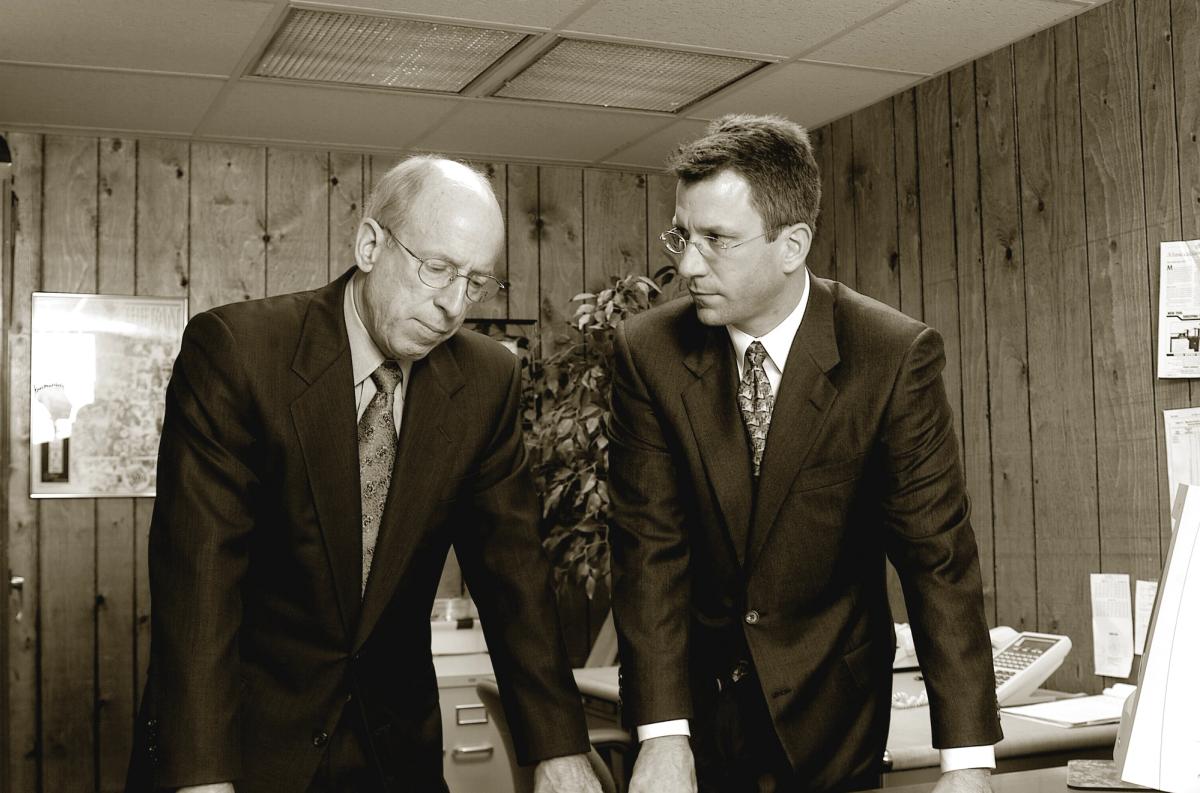
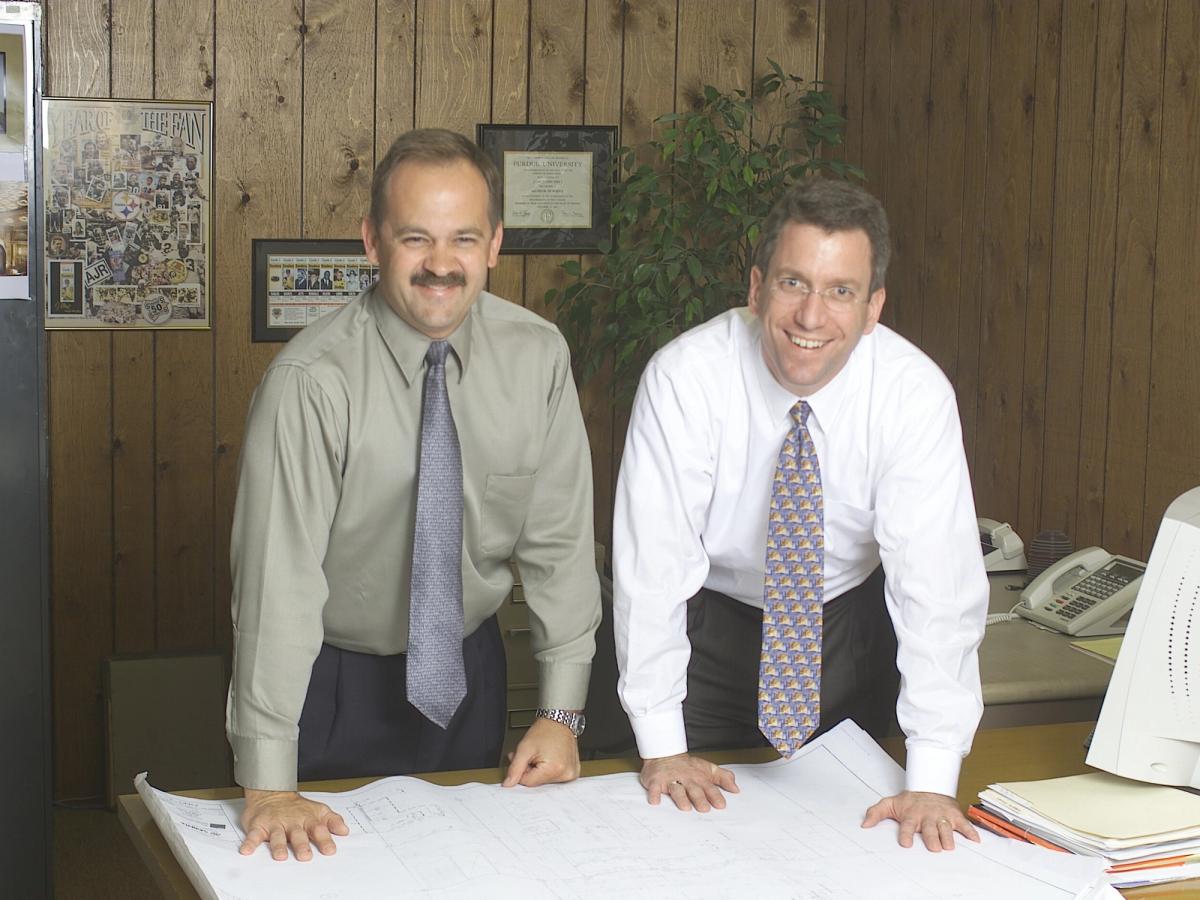
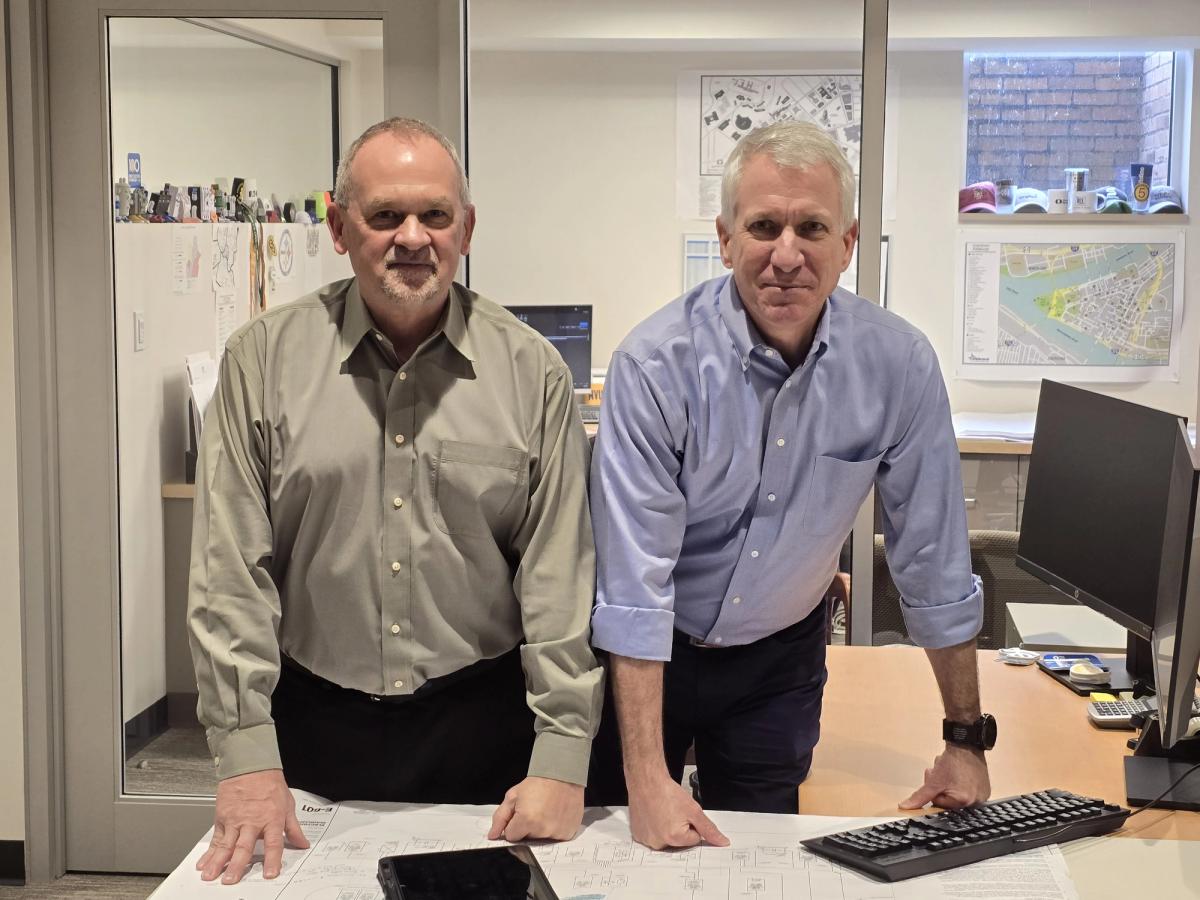
Bill and Jim in 2026
During the preconstruction phase of the Kamin Tower, the COVID-19 pandemic hit. Because of Ferry Electric’s embrace of technology, its response to the shift in workplace that resulted from the pandemic was less disruptive.
“When COVID hit, I panicked a little, but I saw it as an opportunity not to be wasted. Before the pandemic we already had everybody in the office set up to work remotely. I always thought it was inefficient that a project manager would go from home to the office then to a job site and then back to the office again. It always bothered me that I had to hire an estimator who lived within a 30-minute drive because he had to come to the office,” Ferry says. “When the pandemic happened, we leaned all the way into remote work. And we're still working hybrid.”
Ferry points out that working hybrid only works because of the quality of the people doing the work. He credits his father and grandfather for passing along the value of hiring well.
“They taught me to hire good people, support the heck out of them, and get out of their way,” he says.
As Ferry Electric begins its 101st year in business, Jim Ferry is preparing for the next transition in leadership. Bill Puhlman plans to retire at the end of 2027. Ferry’s three children are pursuing careers in fields other than construction. Ferry recently announced the transition plan to his employees, identifying three managers as the next generation of leadership: Scott Ferguson, project manager and manager of Ferry’s Special Projects Division; Dave Wytiaz, chief financial officer; and Bob Madison, chief estimator.
“They have agreed to be the next generation of leadership in the office. Over the balance of 2026, we are reassigning Bill’s responsibilities among the three. Bill will manage a few projects for long-term clients in 2027, which makes him happy as a clam,” Ferry laughs.
“I will then start offloading some of my day-to-day operational responsibility to step back into just an ownership role and work on strategy and vision,” he continues. “I can mentor these three over the next couple of years on how to think like a business operator and not just an employee. There's a lot of work in that kind of perspective change and I want to make sure we do it right.”