Let’s begin this feature inside your living room, where you’re on the couch, watching Love Is Blind with your wife. With a start, you realize your father’s birthday is two days away and you don’t have a gift. Time is tight, so you won’t be able to hit up Home Depot or Lowe’s. Instead, you hop onto Amazon, find a power drill, plug in his address, your payment info, and click order.
Then you forget about it until two days later, when he calls to say thanks.
Now let’s pull out a little. At the exact moment you pressed purchase, your neighbor is ordering a new hat. Across town, someone’s buying a Steelers jersey. A restaurant is replenishing its napkins. A contractor is ordering drill bits. A hospital is restocking surgical supplies.
Throughout that very same evening, thousands of purchases are made across Western Pennsylvania. Hundreds of thousands across the Commonwealth. Millions nationwide. And every customer expects exactly the same thing: It'll be there when I need it. If it’s not, I’ll be annoyed and start using a different site.
This all occurs through a screen, most often one that is on a handheld device smaller than a sock. It has become so rote that we forget how incredible that is. Every order is unique. Every product comes from a separate location, many originating on other continents. Hundreds of millions of inputs and outputs so seamlessly integrated that you can get almost anything within 48 hours.
That’s absolutely wild. And it wasn’t always this way. Us ancients remember a time before Amazon, when wanting something meant going somewhere and if they didn’t have it stock, well that’s just what it was.
How did such a remarkable improvement in capabilities come about? The answer isn't a single technology, company or innovation but rather an insanely complex logistics ecosystem. This network is composed of ports, highways, railroads, trucks, aircraft, software, forecasts, workers, software, robots and warehouses all functioning flawlessly together.
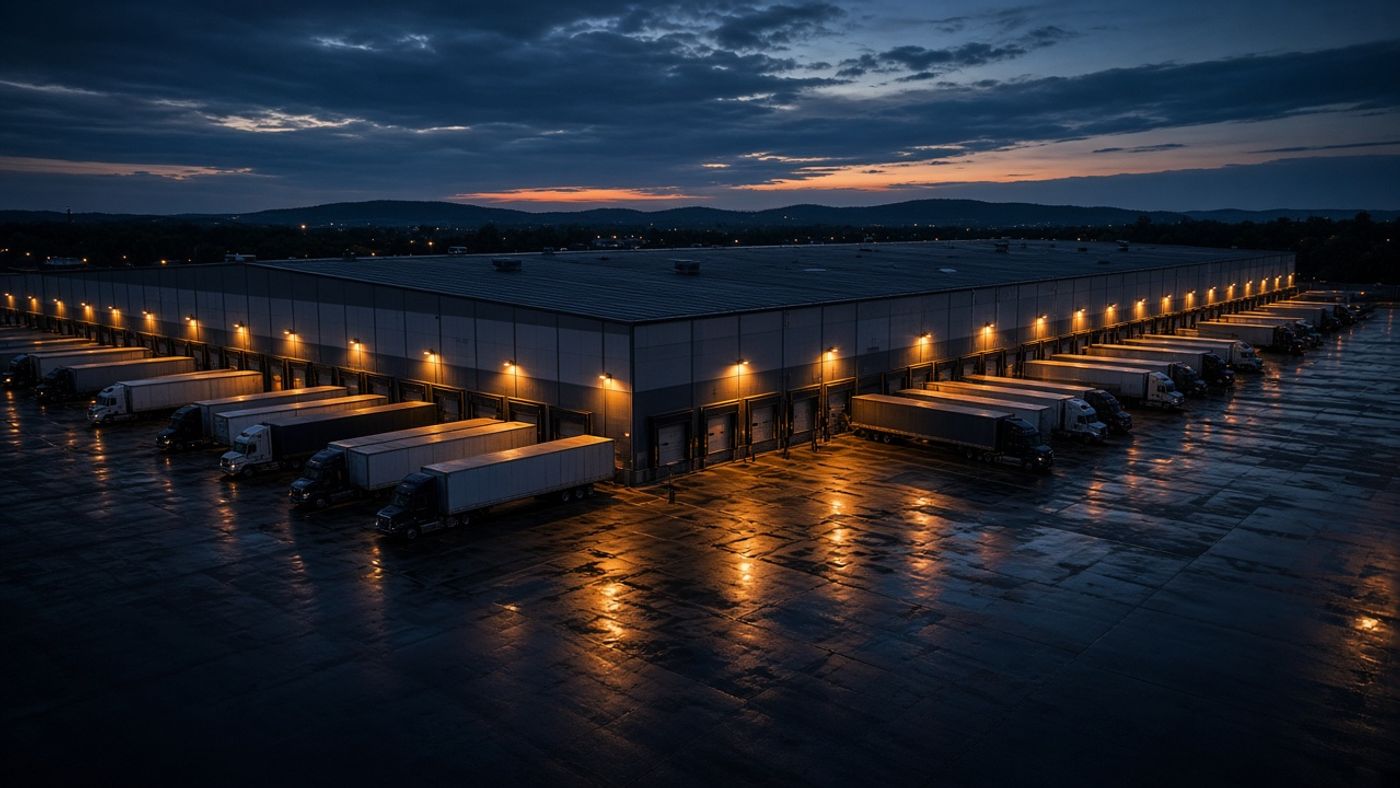
Every piece of that puzzle matters, but the most important for this audience is the distribution center. These remarkably plain buildings have been driving real estate development for years and their rather boring exteriors often hide extremely sophisticated organizational systems.
These systems have been evolving for years, and while Amazon gets the lion’s share of credit for the explosion of warehouse development, it was Wal-Mart that got the ball rolling. They were the first retailer to develop military grade logistics capacity for consumer goods, which meant you could go there and buy nearly anything cheaper than you could anywhere else.
When Amazon began heating up, they poached a lot of Wal-Mart’s logistics specialists and took their ideas into the digital age. In doing so, they enabled almost anyone to buy almost anything from a screen. This proved quite popular with the populace, and Amazon immediately began eating into traditional retail sales.
Big chains quickly realized that to compete with Amazon they needed to reorganize and expand their supply chain. This resulted in an explosion of warehouse development. From 2013 to 19, developers raced to construct hundreds of millions of square feet across the country.
The pandemic poured gasoline on that fire. Almost overnight, Americans couldn’t shop in person and they couldn’t go anywhere. So, they stopped spending money on vacations, concerts, restaurants and sporting events. Instead, they redirected those dollars toward physical goods. Home offices needed desks and monitors. Backyards got new grills and patio furniture. Garages filled with exercise equipment. Bored children needed toys, televisions, computers.
“The coronavirus was the greatest impetus for industrial real estate development, primarily warehousing, in a generation,” said Lou Oliva, Executive Managing Director at Newmark.
“Interest rates dropped, industrial development exploded, and major users like Amazon were expanding aggressively. There was a huge appetite.”
CoStar data shows that from 2020 to 23, over a billion square feet of industrial square footage came online across the nation. That’s about 36 square miles of warehousing, and remarkably, most of it leased. Vacancies only began to rise as the pandemic waned, and consumer behavior shifted again.
That meant fewer grills, home gyms, and televisions were moving through the supply chain. Durable goods spending, which surged 6.4 percent in 2020 and another 22.8 percent in 2021, settled into more sustainable low-single-digit annual growth, while services spending rebounded sharply.
Retailers suddenly found themselves with excess inventory and the frantic race for distribution space subsided. CoStar data shows a rapid decline in net absorption levels, which sent national vacancies from 3.5 percent to seven percent in two years. Developers pulled back, and construction starts began to drop in late 2022.
As the market returned to a more sustainable pace governed by the traditional economic fundamentals that drive warehouse demand: consumer spending. By these measures, the sector’s outlook remains quite encouraging. Monthly retail sales have risen from roughly $453 billion in 2016 to approximately $747 billion through the first months of 2026, another all-time high.
Online sales, a primary driver of warehouse demand, reached $326.7 billion during the first quarter of 2026, up 9.8 percent from a year earlier and now accounting for 16.9 percent of all U.S. retail spending. The nation's rail network tells a similar story. Average monthly intermodal rail traffic has increased from roughly 1.09 million containers and trailers in 2016 to more than 1.21 million in 2026, the highest level in the series.
So, the national softening of the market appears to be driven more by excess pandemic supply than collapsing demand. Multiple recent reports by major firms in the industry as well as data from groups like CoStar support the idea that the cooling was actually a healthy return to normalcy.
A second quarter Cushman & Wakefield report on the sector indicates that leasing activity has strengthened as new development slows, particularly among larger users occupying modern logistics facilities. Prologis, the world’s largest industrial developer, reported record second-quarter warehouse leasing activity with 67 million square feet of leases signed and raised its full-year earnings and development outlook, citing strengthening demand for logistics space and rapid growth in data centers.
A good sign a recovery is underway: investors have also begun returning to warehouse purchases after a two-year lull. CoStar’s data shows that national industrial property investment peaked in 2021, when more than 42,600 properties traded hands for approximately $166.3 billion. Activity slowed sharply over the next two years as higher interest rates reduced transaction volume, with annual sales falling to roughly $81.5 billion across 26,200 transactions in 2023. Since then, the market has steadily recovered. Annual sales volume increased to $95.5 billion in 2024 and $108.3 billion in 2025, while transaction activity climbed to more than 35,100 sales.
Cushman & Wakefield's 2026 report on the national industrial scene found that overall industrial capitalization rates averaged 6.23 percent, down slightly from 6.29 percent a year earlier, suggesting property values have stabilized after the rapid repricing that followed higher interest rates.
Their study notes that the average cap rates declined from 5.36 percent to 5.28 percent for Class A properties and from 6.16 percent to 6.02 percent for Class B assets. They believe that acquisitions will likely accelerate in the coming quarters as buyers and sellers continue closing the gap between asking and offering prices. While Class A facilities in major distribution markets remain highly sought after, many investors are increasingly targeting well-located Class B industrial buildings with below-market leases that offer opportunities to raise rents as tenants renew.
Cushman and Wakefield also noted that value-add projects with weighted average lease terms of three years or less are particularly attractive because they allow owners to capture market-rate rents more quickly. Location remains paramount, with investors favoring infill properties near population centers, interstate highways, available labor and reliable power infrastructure.
An analysis of CoStar's sales comps reveals where that capital is flowing at a more granular level. Every major region of the nation recorded higher industrial investment activity in 2025, although the pace of recovery varied. The South remained the nation's largest destination for capital, with approximately $31.6 billion in industrial property sales, up 17.2 percent from the prior year. The West Coast followed with $24.0 billion, an increase of 14.9 percent, while the Northeast reached $20.3 billion, up 10.5 percent. The Southwest posted the fastest growth, with sales volume climbing 17.8 percent to $16.8 billion and transaction activity increasing 29.4 percent. The Midwest recovered more gradually, with sales volume rising 3.9 percent to $15.6 billion despite transaction counts increasing 19.3 percent, suggesting a larger number of comparatively smaller transactions.
The recovery has occurred without a meaningful decline in asset values. Average industrial sale prices increased from $130 per square foot in 2021 to $153 in 2022, remained relatively stable at $151 in 2023, then climbed to new highs of $156 in 2024 and $157 in 2025.
The strongest demand has centered on the largest facilities. Sales of buildings exceeding 500,000 square feet rose from 236 in 2024 to 342 in 2025, a 44.9 percent increase and the highest level since the pandemic-era boom. Mid-sized facilities also posted double-digit gains, while transactions involving industrial buildings larger than 100,000 square feet reached 36,471 in 2025, surpassing their 2022 level.
In other words, the market is self-correcting after the greatest logistics disruption in the history of the planet. Barring another black swan event or serious economic slowdown, the long-term national forecast is bullish.
That’s true nationally and locally, though the story in Western Pennsylvania is a bit more nuanced than in hubs like Columbus, Lehigh Valley, or Inland Empire.
First, the overhead view: Pittsburgh's industrial market has cooled but remains quite stable according to CoStar data, regional reports, and intel from local experts.
“Our market is still very healthy, but things have normalized since the pandemic,” said Oliva.
“Vacancy has ticked up a little but there's a series of buildings that hit the market at roughly the same time so that’s not worrisome. The airport market, which has been our hottest area, has softened.”
Rich Gasperini, Principal at Genfor Real Estate, concurs.
“We definitely saw a slowdown in tenant demand throughout 2023 and 2024, but the market began improving toward the end of last year despite the initial macroeconomic uncertainty surrounding tariffs. Today, we'd characterize the industrial market as stable and continuing to improve, with supply and demand remaining in balance in Pittsburgh, which leaves us optimistic about where the market is headed.”
Vacancies have climbed slightly, but at 5.6 percent, they remain some of the tightest in the country. This is due in large part to constrained construction. Pittsburgh's industrial inventory has grown from approximately 238 million square feet in 2021 to 244 million square feet today, an increase of just 2.7 percent. Developers have delivered roughly 6.4 million square feet of new industrial space during that period, including approximately 623,000 square feet over the past 12 months, well below the pace seen in many competing logistics markets.
Development was also not concentrated exclusively in large distribution centers. Of the roughly 38 projects completed during that period, 25 ranged in size between 10,000 and 50,000 square feet, underscoring the region's continued demand for smaller and mid-sized industrial facilities alongside larger logistics assets.
“The deal size here is a lot smaller here than at the national level,” said Dom Broglia, the head of Business Development at ARCO.
“Leases are typically done are anywhere from 10,000-50,000 SF. A large sized projects here is 200,000 square feet.”
And demand has largely kept pace with the new supply. CoStar shows that vacancy among buildings completed since 2022 currently stands at approximately 11.5 percent, an improvement of 1.8 percentage points compared with one year ago. The region has recorded approximately 542,000 square feet of positive net absorption over the past 12 months, and much of that has been driven by a handful of major occupiers.
EOS Energy signed a 430,000-square-foot lease at 150 Thorn Hill Road in the North Pittsburgh submarket, while Mondi Packaging USA committed to 232,000 square feet in West Pittsburgh. U.S. Steel also expanded its footprint, leasing 225,000 square feet in South Pittsburgh.
Over the past 12 months, the strongest leasing activity is concentrated in just a few submarkets. CoStar shows that Beaver County led the region with nearly 490,000 square feet of positive net absorption, followed closely by North Pittsburgh at more than 493,000 square feet. Westmoreland County also posted healthy gains with nearly 191,000 square feet absorbed.
Those gains were offset by notable move-outs in South Pittsburgh, which recorded negative absorption of roughly 520,000 square feet, and Parkway East, where occupancy declined by approximately 200,000 square feet.
The market’s strength can also be seen by a return of capital. After peaking at nearly $500 million in 2021, Pittsburgh's industrial investment market cooled sharply as rising interest rates, higher borrowing costs, and a widening gap between buyer and seller pricing slowed transaction activity. Sales volume fell to just $128 million in 2023 before rebounding over the following two years, reaching $362 million in 2025.
While annual dollar volume remains below the post-pandemic peak, transaction activity tells a different story. The market recorded a five-year high of 270 completed sales in 2025, suggesting investors have returned with greater confidence, albeit focused on smaller transactions and more disciplined pricing rather than the large portfolio acquisitions that characterized the market's earlier surge.
CoStar currently tracks just seven industrial projects under construction across the Pittsburgh market, reinforcing the region's measured approach to new supply. Together, these projects represent a little more than 1.1 million square feet, with only one development exceeding 300,000 square feet.
The largest is a 325,000-square-foot building at 360 Keystone Drive, followed by a 232,400-square-foot warehouse on International Drive. Beyond those, the pipeline consists primarily of buildings ranging from roughly 85,000 to 160,000 square feet, including projects geared toward manufacturing, distribution, and warehouse users.
The reason for the regional’s subdued development is simple: Pittsburgh is not and will never be a logistics hub in the way that markets like Lehigh and Columbus are.
“We’re what I call a ‘tweener’,” said Oliva.
“Columbus can cover us and Lehigh Valley can cover us. But both can still go the other direction and hit millions of people. Pittsburgh's geography made it an industrial powerhouse during the era of rivers and railroads. Modern distribution networks, however, are built around interstate highways, truck drive times, and proximity to population centers.”
“There aren’t many developers here that are interested in building speculatively,” confirmed Broglia.
“But there are a lot of opportunities here with data centers and manufacturing.”
While much of the country focuses on where data centers are being built, Western Pennsylvania is increasingly positioned to manufacture the equipment, electrical systems, specialty metals, and industrial components that make those projects possible.
Take another look at those most recent leases and headlines: EOS Energy, U.S. Steel, Lighthouse Electric, Mitsubishi Power, GE Verona. They all deal with power production or components needed to make hyperscaler data centers function. In fact, of the 15 deals larger than 100,000 square feet that were signed since the end of 2024, 11 were for companies producing energy and construction equipment that will likely be needed by the data centers.
“Lighthouse Electric kind of explains where it’s going,” said Broglia.
“Energy storage, battery storage. Pittsburgh and Western PA is finding its footing with the manufacturing for these centers.”
Gasperini agrees.
"Companies in this energy supply chain—supplying components for data centers—their business is good. All indications are it will remain good for the next five to ten years. Thankfully, they're making sizable investments in the region, and we think that will continue."
Of course, the controversy stemming from these data centers largely pertains to the strain they place on the power grid. And this issue, rather than lack of demand, is likely the biggest impediment facing the market right now.
“Unfortunately,” said Oliva, “I've had to become much more conversant on that topic because it's the first time in my career that power has become a limiting factor.”
“What I've learned is that once Duquesne Light got out of the generation business and became strictly a distribution utility, the economics changed. I don't pretend to understand every PUC regulation involved, but the bottom line is this: it's becoming a real problem.”
For decades, industrial developers evaluated prospective sites based on access to interstate highways, rail service, available labor, water and sewer infrastructure, and proximity to customers. Those criteria remain essential, but the surge in electricity demand from advanced manufacturing, warehouse automation and artificial intelligence has added another question that, in some cases, outweighs all the others: Is there enough power available to support the project?
The challenge has been years in the making. As detailed in Breaking Ground's March/April 2025 Energy Market Update, the nation's electric grid entered this decade with supply and demand already moving in opposite directions. Coal-fired power plants have continued to retire, replacement generation has struggled to come online quickly enough, and PJM Interconnection's lengthy approval process has slowed the addition of new capacity.
At the same time, electricity demand has accelerated as homes, vehicles and industries become increasingly electrified. Artificial intelligence has amplified that trend rather than created it, exposing constraints that energy producers and utilities had warned about for years.
Industrial development has become one of the clearest examples of those changing dynamics. Modern warehouses consume substantially more electricity than their predecessors because of sophisticated conveyor systems, robotics, automated storage and retrieval equipment, and increasingly complex building management systems. Advanced manufacturers require even greater electrical capacity to support high-powered machinery, precision production equipment and climate-controlled processes.
Data centers have fundamentally altered the scale of the discussion altogether. Engineers interviewed for the Energy Market Update explained that traditional data centers typically required between 100 and 300 watts per square foot, while new artificial intelligence facilities can approach 1,000 watts per square foot and often require liquid cooling systems that dramatically increase overall energy consumption. Some projects now demand hundreds of megawatts of electricity—enough to rival the consumption of small cities.
Those unprecedented requirements are reshaping development strategies nationwide. Rather than waiting years for utility upgrades, many of the country's largest industrial projects are now being designed with dedicated on-site generation or "behind-the-meter" power systems that operate independently of the traditional electric grid.
Others are locating near existing power infrastructure or pursuing sites capable of supporting future transmission upgrades. At the same time, shortages of transformers, turbines and other electrical equipment have created another bottleneck, extending project schedules while increasing costs.
The increasing power and capability of artificial intelligence, which is what these power-hungry data centers are being developed for, promises to have an enormous impact on how distribution center’s function. Cushman & Wakefield argues that AI will fundamentally reshape logistics by reducing one of the industry's greatest challenges: uncertainty.
The increasing power and capability of artificial intelligence, which is what these power-hungry data centers are being developed for, promises to have an enormous impact on how distribution center’s function.
Today's supply chains rely on large inventories, excess warehouse space, and complex distribution networks because companies cannot perfectly predict what consumers will buy or when they will buy it. AI promises to dramatically improve demand forecasting, allowing businesses to position inventory more intelligently, optimize transportation routes in real time, and automate warehouse operations.
The report also suggests these advances will change the types of industrial properties companies seek. Rather than functioning simply as places to store products, warehouses are expected to evolve into highly dynamic fulfillment hubs where AI continuously orchestrates inventory, robotics, labor, and transportation across an entire logistics network.
As warehouses become increasingly automated and AI-powered, access to reliable electricity, digital connectivity, and modern infrastructure will become as important as traditional site-selection factors such as highways, rail access, and labor availability. This strongly hints that the power issues that have surfaced in the past few years is a long-term challenge for the industrial sector.
Overcoming this power issue will likely be the story of the next few years. It will be immensely complicated and expensive. But imagine the payoff. One day an AI may know that a thunderstorm is about to knock out power in Washington County, a Steelers playoff win will send jersey sales soaring, a contractor in Cranberry is likely to run short on conduit by Tuesday afternoon, and that you're about to remember your father's birthday approximately seventeen minutes before dinner. Hundreds of robots begin moving simultaneously—not because anyone ordered them to, but because the future has become predictable enough that the warehouse starts acting before America does.